
A Halloween Horror Story: The Truth About College Coaching Buyouts
October 30, 2026 | Tim Nevius | FAIR Sports
Fair warning: I took a stab at some Halloween humor (which may come back to haunt me). Short on time? Scroll to the end for the frightening bottom line.
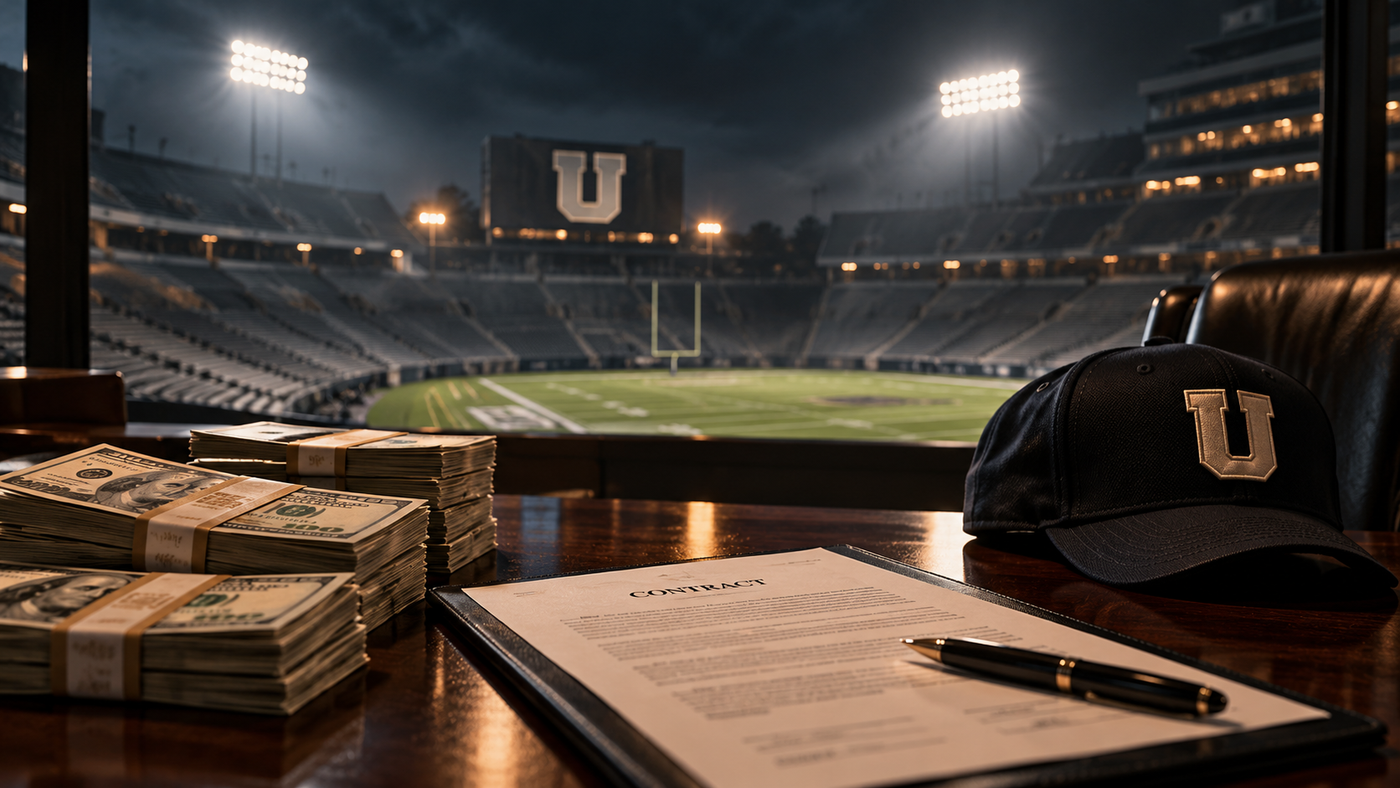
Halloween season has arrived, and there are plenty of scary things in college sports these days. Few things may be more frightening than the price of firing a coach.
In October, Maryland, NC State, and Baylor each fired their head football coach. The reported buyouts are roughly $10 million, $9.75 million, and $12 million, respectively, according to Front Office Sports. Those firings follow a 2025 cycle in which schools paid a record $228 million in buyouts to 15 fired FBS head coaches. And more are expected this cycle.
But the terrifying part isn’t just the size of the buyouts. It’s how quickly they can turn into costly legal battles. Three developments are making those disputes increasingly likely.
1. The BOO-sters Are Getting Restless
The people funding rosters expect a return. Nick Saban said last fall that donors paying for players “think they have a voice” and push athletic directors to act when results slip.
Over the last three cycles, ESPN counted 95 FBS head coaching changes, including a record 33 in the most recent one. In men’s basketball, CBS Sports counted 53 head coaching changes during the 2026 coaching cycle, including 13 at high-major programs.
Boosters aren’t just pushing for coaching changes. In many cases, they’re helping pay for them, giving third parties significant influence over decisions that carry financial and legal consequences for a university.
2. A Financial Reckoning: The Money Has to Come from Somewhere
Paying athletes is now a significant recurring expense on top of coaching buyouts.
Penn State’s athletic director acknowledged that when current coaching contracts were signed, revenue sharing with athletes wasn't part of the math. Boise State projected a deficit of up to $18 million this year, citing revenue sharing as a contributing factor. A board member at one school told CNN of buyout money: “The money does not exist.” Others have called the pattern unsustainable.
Schools are managing financial commitments made under a very different business model. Sometimes the coaching carousel works in their favor. Penn State’s reported $49.7 million obligation to James Franklin, for example, was negotiated down to about $9 million under his contract after he accepted another coaching job.
Other situations can be more contentious. LSU reportedly offered Brian Kelly $25 million, then $30 million, to settle his buyout. He rejected both offers. After LSU apparently raised the possibility of terminating him for cause, Kelly sued. LSU ultimately agreed to pay $54 million over six years, with reductions if he takes another job.
With millions at stake, disagreements over the facts and contract terms can quickly become expensive legal fights, particularly when a school claims it had cause to terminate a coach.
3. The Nightmare of a For-Cause Fight
A for-cause termination can eliminate a buyout entirely, but proving cause can be costly and contentious.
At Kansas, former football coach David Beaty alleged that the school manufactured cause after the fact to avoid a $3 million buyout. The 15-month legal battle ended in a $2.55 million settlement. Kansas’s outside legal fees alone approached half a million dollars, and the dispute generated months of unwanted publicity.
The financial exposure is terrifying, but the uncertainty, distraction, and reputational consequences can be just as significant.
Finding a Way Out of the Haunted House
Contract disputes may be inevitable, but prolonged court battles aren’t. Even in contentious cases, both sides face uncertainty, have reasons to avoid a public fight, and may need solutions that go beyond the buyout amount.
We’ve seen this firsthand at FAIR, where we’ve administered multiple coaching contract disputes this year, including challenges to for-cause terminations and buyouts.
An experienced mediator can help parties assess their positions and negotiate solutions on their own terms, avoiding the cost, publicity, and uncertainty of prolonged litigation.
The Frightening Bottom Line
· Boosters are raising the stakes. Donor expectations and influence are contributing to faster coaching turnover.
· Revenue sharing is increasing the pressure. New financial obligations are complicating coaching decisions and increasing the potential for buyout disputes.
· Litigation can make a bad situation worse. Legal fees, uncertainty, distraction, and unwanted publicity can compound an already expensive termination.
· Mediation can keep an expensive dispute from becoming an episode of Widow’s Bay. It gives both sides a confidential path to negotiate solutions on their own terms, without a legal battle that could haunt them for years.
In a season full of hair-raising buyouts and legal battles, FAIR’s roster of experienced mediators can help parties navigate the unique disputes in college sports. Interested in a private briefing? Reach out at admin@fairsports.org.